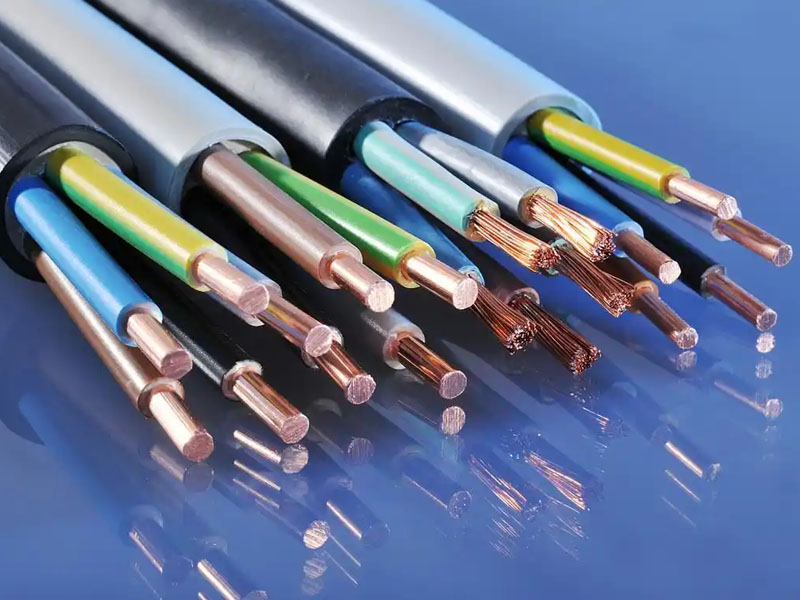

Physical properties of CCA and fire protection technology for wires and cables
With the development of the times and continuous technological advancements, various industries have seen their own technological progress, and metal materials are no exception. Nowadays, there is a wide range of metal materials, and more manufacturers are engaged in businesses such as copper-clad aluminum production and wholesale. Among them, copper-clad aluminum is timely applied. So, what are the material properties of copper-clad aluminum, and what about its fire resistance in wire and cable? Let's take a look together.
Material properties of copper-clad aluminum:
Copper-clad aluminum is a metal composite material that primarily combines the properties of two metal materials within a single wire. Copper-clad aluminum wire integrates the excellent electrical conductivity of copper with the lightweight of aluminum, resulting in a lightweight material. Copper-clad aluminum manufacturers believe that since aluminum conductors have a higher resistivity than copper conductors, using aluminum as the conductor for power cables should result in greater energy loss during transmission compared to copper materials. According to national recommended standards, at 20°C, the DC resistance value of a certain copper conductor cross-section is equivalent to that of an aluminum conductor two sizes larger. In other words, considering energy loss during transmission, a certain copper conductor power cable can be fully replaced by an aluminum conductor cable two sizes larger, as their current-carrying capacities are comparable.
Fireproof technology for copper-clad aluminum wire and cable
In copper-clad aluminum wire and cable, the voltage resistance between the insulation pads on both sides of the insulation head must not be less than twice the insulation level of the cable sheath. The joint form should be compatible with the set environmental conditions and should not affect the flow capacity of the cable. Generally speaking, the cable head is the weakest link in cable insulation, so strengthening supervision and management of cable heads is a critical key to cable fire prevention. Intermediate cable heads placed in cable trenches, cable tunnels, cable trays, and cable interlayers must be registered and monitored using various monitoring devices. Terminal cable heads must not be placed in cable trenches, cable tunnels, cable trays, or cable interlayers. If the cable head exhibits abnormal temperature rise or emits odor or smoke, it should be taken out of service as soon as possible to prevent the cable head from catching fire during operation.